Buying and selling on Marketplace and WhatsApp · South Africa
Paying a stranger on WhatsApp or Facebook Marketplace should be as safe as paying a shop.
Your money waits in a vault, not with the seller, until you’ve checked the item. Delivery is paid both ways, so if it’s rubbish it goes straight back. You tap OK, the seller gets paid.
PROOF OF CONCEPT · PRE-REGULATORY · INSIDER TEST 2026
Every deal with a stranger ends the same way today.
Option A
Pay first and hope.
Send the full amount to someone you have never met, then wait to see whether a parcel arrives.
OR
Option B
Don’t buy.
The item is right and the price is fair, and the deal still dies, because nobody wants to send money first.
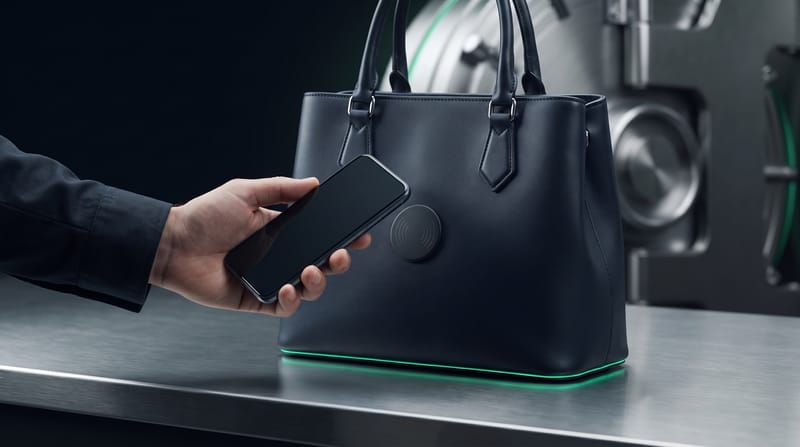
GoSafe removes that choice. Your money stops in a vault on the way to the seller, and only moves on after you’ve checked the item.
1You pay into the vault, not to the seller.
2The parcel arrives. You both agreed how long you get to check it when the deal was set up; three hours is the usual. Not what you bought? It goes back and the courier is already paid. Change your mind for no reason and the return is on you.
3You tap OK. The seller gets paid.
Three kinds of deal
One vault. Three stories.
Story 01 · The parcel
Buying from a stranger
A console, a bike, a phone. You pay into the vault. The parcel arrives, you check it in the time you both agreed (three hours is the usual), you tap OK. Not what you bought? It goes back and the courier is already paid. Change your mind for no reason and the return is on you.
GoSafe is AI-orchestrated escrow for person-to-person sales on Facebook Marketplace and WhatsApp, in rand. It is designed so the buyer’s money waits in a bank-controlled vault until delivery is verified, then is released to the seller: a bank-controlled account today; connecting with a bank is the plan (in build). The AI agent orchestrates the deal over WhatsApp; neither GoSafe nor its agent holds funds. Everything below is how the proof of concept runs on emulators today.
01
FUND
Escrow: the buyer pays into the vault, not to the seller.
Two strangers agree a deal on Marketplace or WhatsApp. The buyer pays by EFT into a bank-controlled vault (in build). The seller sees that the money is held, and ships.
02
SHIP
Courier prepaid both ways, split 50/50.
The courier is paid half by the buyer and half by the seller, and both legs, out and back, are prepaid up front. If the item comes back because it is not as described, nobody argues about who pays the courier. If the buyer keeps the item, the unused return leg is credited back 50/50 to both parties. A return for no reason, with the item as described, is at the buyer’s cost. From the courier’s pickup scan to the delivery scan, loss or damage is for the courier’s account; courier insurance can be taken out.
03
CONFIRM
The buyer’s one-time code, plus the courier’s delivery event.
The inspection window is agreed by both parties at deal creation (default three hours; from a few hours to a couple of days) and runs from the courier’s delivery scan. Within it the buyer confirms with a one-time code (OTP) sent to GoSafe. The courier’s delivery event arrives by API. Neither one alone moves money.
04
RELEASE
Two approvers, then the seller is paid.
Release needs two operations approvers (one person cannot approve twice) and produces a bank-verifiable evidence pack: the code, the courier events, the approvals and a slice of the audit chain.
Title record · OpenTimestamps
Every deal mints a digital title record, timestamped with OpenTimestamps: a Bitcoin-anchored proof that the record existed at that moment. It is the certificate pattern Attesté uses for artworks, lifted into GoSafe. A timestamped, verifiable record, not a claim of legal effect beyond that.
NFC tag binding
In the tag scenario the seller fixes an NFC tag to the item and scans it, which binds the tag to the title record. The buyer scans the same tag on receipt. Tag scan plus the courier’s delivery confirmation conclude the deal, and the buyer holds an OpenTimestamps certificate of title: proof of ownership and provenance.
Vehicle check · designed, in build
For a car, GoSafe is designed to run a TransUnion vehicle verification before the deal can conclude: registration, VIN and engine number must match; outstanding finance and police-interest flags decide what follows. Financed: split release, financier first. Police interest or mismatch: hard block. The buyer’s money is confirmed received in the vault before the two parties meet, which also keeps tyre-kickers and lowballers away; the handover happens in daylight at a public place, and nobody carries cash. In the proof of concept the verification adapter is mocked; no live data source is connected today.
GoSafe Check · in build
A free “check before you pay” agent on WhatsApp, not live yet. As designed: forward the listing and the chat screenshots, get a risk read. It will hold no money, judges the transaction and never the person, says “lower risk” and never a promise, and purges screenshots after assessment. A privacy notice for it will be published before it processes anything.
What moves money, and what never does.
Releases money
✓The buyer’s own one-time code, sent to GoSafe
✓Or auto-release once the agreed inspection window has passed (the auto-release clock uses the window both parties set at deal creation; default three hours)
✓Then two operations approvers. One person cannot approve twice.
✓Every release ships with a bank-verifiable evidence pack
Never releases money
✗Platform-reported evidence on its own
✗A courier delivery event on its own
✗A screenshot of anything, from anyone
✗The AI agent. It has no tool that can move money.
R0
Zero rand: the amount the agent can move. Structurally zero: there is no tool in the agent’s hands that touches funds. A red-team suite scripts a model to try every trick, and the money path stays deterministic.
The long-form answers, including data and POPIA, are in the FAQ.
Proof of concept/Pre-regulatory/Insider test 2026/No regulatory approval is claimed
Register interest
GoSafe is not open to the public yet.
It has been built and verified on emulators; the next step is a small test with named insiders only. Leave your details if you want to hear when that changes, as a buyer, a seller, a courier, or a bank.